Monday, 26 March 2012

Super (2010)

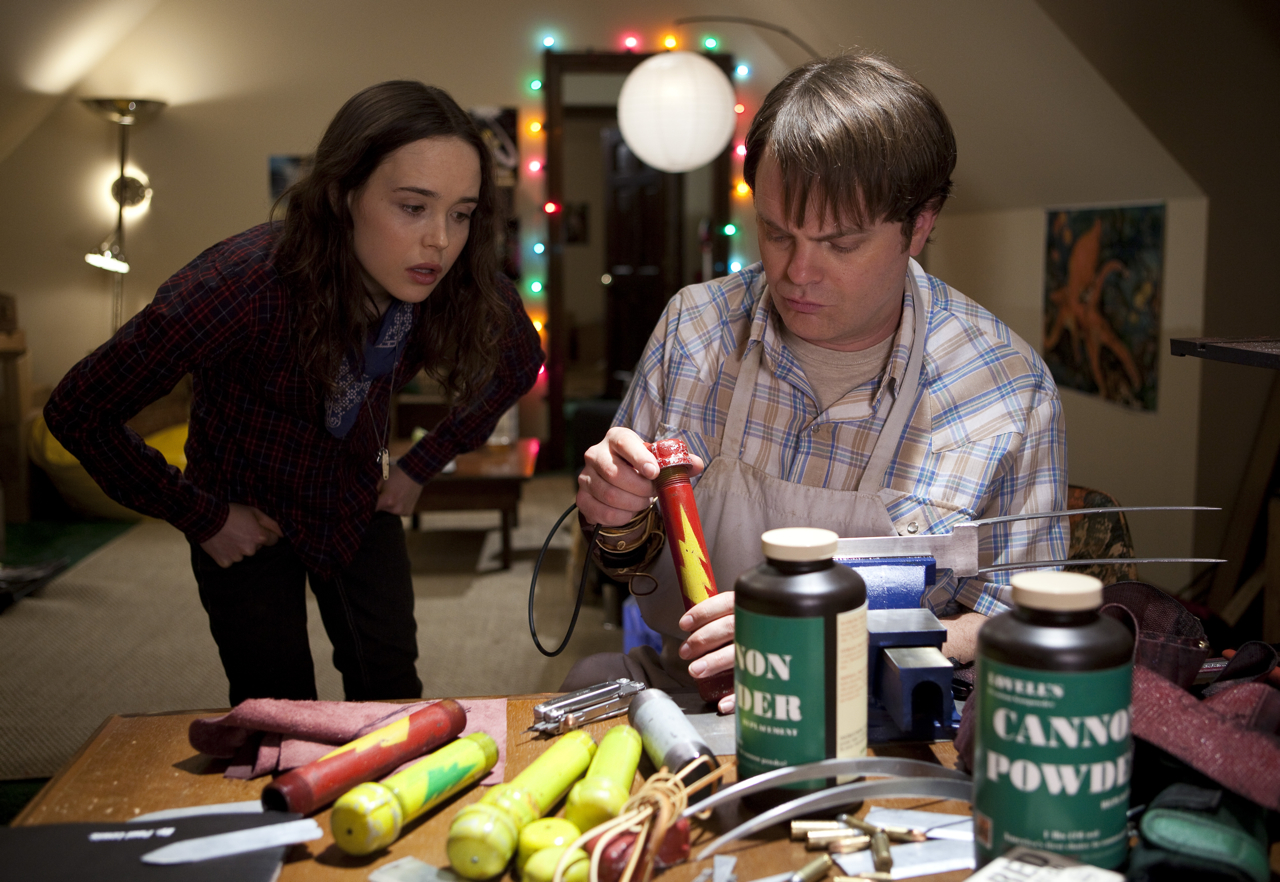
What is less well-known is the second "average guy becomes a costumed hero, with plenty of graphic violence, swearing, and an adorable, if psychotic, female sidekick" movie that came out in 2010 - one with less than a tenth of the budget of Kick-Ass and around half of the restraint. There's a slight difference, in that our underdog hero this time is Rainn Wilson's boring and put-upon middle-aged failure, and his motivation is less about being a superhero, and more about saving his disinterested girlfriend from drug dealers. However, it's very unfair to call this a cash-in on Kick-Ass, as this film takes a more realistic approach, glorifying absolutely nothing about our two main characters and, in fact, showing that both of them are really damaged beyond repair. As over-the-top as Kick-Ass seems, Super is actually far more brutal and realistic in terms of violence, eliciting disgust and wincing rather than any kind of admiration, including the heroes' own actions in assaulting criminals with tools. There were multiple points in this film where the violence wasn't just graphic, but actually oddly upsetting, not least in the bittersweet finale. All in all, this is an enjoyable film for those who like very black comedy, and can appreciate the fact that this goes even further with the message that being a superhero is a good way to get hospitalised. Admittedly, the religious subtext is very strange, and all but forgotten after the first half of the movie, but is understated enough to not be intrusive, and offers the bonus of Nathan Fillion as Jesus-themed hero Holy Avenger.


It's only terrorism if you don't wear a brightly-coloured costume.

Saturday, 24 March 2012

The Hunger Games (2012)

This is probably the first film of the year for which the hype machine has been in true working order. Before The Dark Knight Rises and The Avengers, we have The Hunger Games, an adaptation of the young adult science fiction novel by Suzanne Collins (who, for the record, had never read/seen Battle Royale). And, sad to say, the hype was for naught. At best, this is a middle-of-the-road film, breaking no new ground, offering no breakout performances, and leaving little impression. At worse, it's a derivative, treacle-paced bore-fest that spends too much time on boring build-up, ending in disappointing pay-off. It feels like an hour before we get to the eponymous contest, and when we do, there's an alteration between flashes of poorly-shot fight sequences and Jennifer Lawrence traipsing through the forest. And despite this incredibly long build-up, we see almost nothing of the training for the games, and every single contestant besides our mains, Katniss and Peeta, and the designated uber-baddie, get precisely no development - not even (with two exceptions) a name-drop. Why should I care about a character I know nothing about? Throughout, my mind kept drifting back to one of my favourite films, the aforementioned Battle Royale, another tale of school-children picked by a dystopian government for a game of last-man-standing murder. It's just not a fair comparison. In Battle Royale, alliances formed between the contenders based on either old friendships or an attempt to bring down the gamemasters. The Hunger Games had an alliance of antagonists for no discernible logical reason. Battle Royale offered characters we could care about, reacting in realistic ways to their situation. The Hunger Games offers a group of red-shirts with clearly delineated good guys and bad guys. This is the only conclusion - it's been done before, and it's been done better. The Hunger Games ends up as a watchable disappointment but, with three sequels in the works, a successful one.


Seriously, just watch this film. It's both horrifying and hilarious.
Monday, 5 September 2011

Battle: Los Angeles (2011)

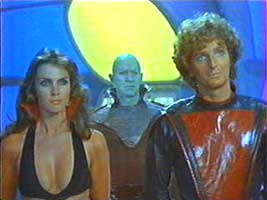
If you attempted to make Independence Day in the real world, as opposed to whatever over-compensating, disaster-prone reality that Roland Emmerich inhabits, it might look a little something like this. However, this threatens to rob the film of the greatest advantages of Independence Day, namely the spectacular special effects shots. While Battle: LA is not devoid of special effects, they are more akin to District 9, opting for more gritty realism. However, effects aside, if there is a word to describe this film, it is simply "safe". Not a single original risk is taken with this production; it is a supremely cliched alien invasion story populated entirely by the stock marines we have come to expect. We have our unambiguously evil alien invaders. They have superior, if not insurmountable, technological capabilities. Their objective is the theft of our natural resources, in this case our water. As for the marines, Handsome-Leading-Man, Out-Of-His-Depth-Young-C.O., Ethnic Minorities #1, #2 and #3, Rookie, Cocky-Guy, and Michelle Rodriguez (who is, in herself, a stereotype). The unoriginality is the main obstacle to be overcome, as if you just want a basic, no-frills action film about an alien invasion, this will do. Those who would prefer something they haven't seen dozens of times before are going to be sorely disappointed. If you've seen a few movies in your time, then there are no prizes for guessing every plot-twist, as they're sign-posted from miles away. Add a dash of uninspiring design on both the aliens and their technology, and the finished product is a film that will likely entertained as you're watching it, but which quickly becomes more disappointing the more it is contemplated. If you want realistic aliens, stick with District 9 or the original Day The Earth Stood Still; if you don't, you can't go wrong with Mars Attacks or Emmerich's Mac-vulnerable extraterrestrials.
Would marines have even been necessary if these guys made up the welcome wagon?

Pirates of the Caribbean: The Curse of the Black Pearl (2003)

I remember that when this film came out, it was the first time I looked at a Disney film and saw something that seemed a far-cry from the sugar-coated productions we are used to from the House of Mouse. Of course, this is rather foolish in that it ignores the staggering body count found in most of the animated Disney films, but here was a movie that a teenage boy could claim to attend and enjoy without the same embarrassment as admitting that Mufasa's death is one of the most formative and traumatic experiences of your life. But Pirates was and is a gem in this category, nothing particularly spectacular, but immensely enjoyable, suitable for kids with the sanitised pirate hordes, and featuring the indefatigable Jack Sparrow before he was diminished by being written as Jack Sparrow rather than a true character. The score is memorable, the humour is dark and rather adult in places, and the scenery is pretty stunning, particularly the Caribbean imperial outpost Port Royal. Seemingly endless sequels have caused the series to pall considerably, but the original is still extremely watchable, reminding us that far more important to piracy than the plundering, burning, maiming, murdering, and whoring is the freedom that comes from the open ocean. At least that is what Disney would like us all to think.
A large part of me hopes that Michael Bolton attended his own "piracy" court date dressed like this...

Sunday, 13 March 2011

Zeitgeist: The Movie, Zeitgeist: Addendum, Zeitgeist: Moving Forward (2007, 2008, 2011)

I could write an incredible diatribe against these three films, particularly the first but also the second and third. The first is a veritable maelstrom of misinformation, blind conjecture and outright lies. A ridiculous attempt to tie an inaccurate account of the origins of the Christian faith to demonstrably false conspiracy theories about the 9/11 atrocities, all in order to blame the faceless and omnipotent "corporate bankers" that seem to be the source of all the world's ills. Films two and three dial down the insanity and, while retaining the crackpot economic theories, focus on the Venus Project, the brainchild of "social engineer" Jacque Fresco. It's a Roddenberryian view of the future, and while it has alot of merits, not least its emphasis on throwing resources into scientific advancement and betterment, it a rosy-tinted view, throwing imaginary technology at the various problems facing the world, and, in my humble opinion, over-stating the viability of alternative energy sources. In particular, the second film lauds geothermal power as a complete solution to the energy crisis, while failing to mention it's tremendous output of greenhouse gases. There simply are no easy fixes in the world, there are only possibilities. It will take more than a factually dubious "documentary" film to make any difference, and I personally think that the Zeitgest Movement resulting from these productions is an idealistic, short-sighted, scientifically-uninformed and credulous waste of time which might be put to far better use.


9/11 conspiracy? Does this look like Lex Luthor to you?

Friday, 18 February 2011

Kaijū Sōshingeki / Destroy All Monsters (1968)

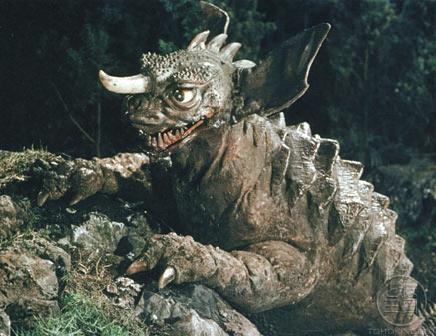
The theory behind Destroy All Monsters is the same theory as lurks behind every great money-spinning scheme; get a bunch of recognisable rubber monsters together and have them beat the ever-loving gravy out of one another. Sadly, this is the film's only real strength, with an extremely long and drawn out plot before we get to the final monster melee. Admittedly seeing all the monsters attack cities is enjoyable, especially featuring the best attack by Godzilla on New York City committed to film, but the story is stock alien invasion, Invasion of the Body Snatchers fare. It's almost not worth sitting through the first chunk of the film to see the goofy rubber beasties lay the smack-down, including some under-rated monsters like Varan and the mighty Baragon. The final fight certainly fulfills the function of providing stock footage for the next few films in the slowly spiraling-downward 70s Godzilla films. All in all, this is memorable mainly for its finale, and as a film it fails to stay engaging enough to justify holding the viewers attention. Disappointing.


All Hail!

Wednesday, 16 February 2011

Hot Fuzz (2007)

The second addition to Edgar Wright's "Blood and Ice Cream Trilogy" (inspired by Krzysztof Kieslowski's "Three Colours" trilogy) lampoons the "buddy cop movie" genre by subjecting it to the same treatment as Shaun of the Dead; i.e. they take a Hollywood formula and set it in a sleepy English setting, complete with all the irony and cynicism inherent to British comedy. Hot Fuzz brings in many other movie conventions as well, however, mocking slasher films, mildly implying that the male leads are a rom-com couple, and even an epic kaiju-style battle between Tim from Spaced and James Bond. This film could easily be called "Chekov's Gun: The Movie", where almost everything in the first half of the film comes back as something relevant to the finale. This isn't a criticism, as it is incredibly self-aware, relishing the corniness and partaking in the cliches wholeheartedly and with heavy sarcasm. Honestly, for a Brit, it's just nice to see the quintessentially American action film being played out in a more recognisable location, particularly scenes like the armed police storming a Somerfield, or the typical one-liners delivered in a thick Gloucestershire accent. This is just good fun, functioning well as both a parody and a genuine example of a loud and action-packed action movie, as well as being downright hilarious. The third edition in the trilogy, tentatively titled The World's End has alot to live up to.


Make a crack about gingers. I dare you.

Tuesday, 15 February 2011

Marjoe (1972)

Marjoe is one man's confession for a misspent childhood and a dishonest career as a young adult. Marjoe Gortner was a child preacher, forced into the pulpit by his parents and taught to learn sermons by rote and recite them to his congregations. After raising (by his estimate) $3,000,000, he managed to escape from this life and lived with an older woman for a time. Eventually he did return to preach, citing monetary problems. However, after a few years he suffered a crisis of conscience, and decided to pay penance to society by inviting a film crew to follow him while preaching and exposing the hucksterism and sheer cynicism of these travelling preachers, who simply fleece believers of their money. Marjoe himself is a charming presenter, speaking very frankly and openly about his experiences, both confessing that tricks are used to exploit the vulnerability, and openly lamenting that he has done wrong in his life by preaching what he doesn't believe to the masses. The vast majority of the scenes are of Marjoe's preaching, which I have to say I found very disturbing. He speaks nigh-verbatim from a script to each different meeting, and the people are held in utter thrall by his various platitudes. People moan and shake and collapse onto the floor when "healed," and pay through the nose for the pleasure of this intense and socially-pressured placebo effect. Perhaps the most harrowing moments are the shots of bewildered children who show real fear as the adults around them spasm and warble in "tongues". Mr. Gortner deserves great praise for his courage in sabotaging a career path which would have gained him easy money, just to reveal to the wider world the essential dishonesty of this kind of preaching.


Sadly only to die in lightsabre combat with a robot.

Sunday, 13 February 2011

Gamera: Daikaijū Kuchu Kessen / Gamera: Guardian of the Universe (1995)

After many years of Gamera films aimed at children, not to mention an incredibly lazy stock-footage film made by the company who bought Gamera owners Daiei from bankruptcy, the franchise was in need of a reboot. And what a reboot it was, dispensing with the more childish elements of the series and creating a darker and more adult action story. Of course, the ridiculous Gamera-gore is present, but in this environment it seems more appropriate. As kaiju films go, this movie is remarkably well-paced, keeping up enough monstery action to offset the human drama. Gamera is pitted once again against his earliest foe, Gyaos, though with the updated back-story that he is a biological defence mechanism created by the lost civilisation of Atlantis. The Gyaos initially appear on a rain-soaked tropical island, and given that Jurassic Park came out just two years prior, the inspiration is plain to see. They even find time for the plucky female scientist to go rooting through an enormous pile of Gyaos guano. The Gyaos themselves suffer from the same problem as any flying monster, as they tend to look stiff and unnatural, but the final Super Gyaos looks much better, attacking from both sky and ground by using its wings to walk. And both Gamera and Gyaos look colossal, once again due to steller miniature work and clever use of forced perspective and low camera angles. It's not perfect, as the scene transitions look incredibly amateur, and the dubbing, while not the worst I've heard, can be a little bit hokey. But overall this is a very good film, and happily it's only the first in a trilogy of Heisei Gamera films, each of which is said to be better than the last, even though only two out of three feature Steven Seagal's daughter.


Imagine how much better Disney's Atlantis could have been...

True Grit (2010)

Jeff Bridges is always an awesome actor, even when he talks like a dog barking, and his portrayal of Rooster Cogburn, the role made famous by Western legend John Wayne is no exception. He's the quintessential grizzled old gun-slinger, and spends the entirety of this film swinging between the poles of "cool as a cucumber" and "laugh-out-loud hilarious", throwing gruff insults at Matt Damon and being blunt to the point of amusement. But there is someone in this film who threatens to steal every last scene from Bridges; young Hailee Steinfeld, who after a series of supporting roles in teen film and TV landed her first major role as Hattie Ross, and has already landed a well-deserved Oscar nomination, all at the tender age of 14. And unlike many Academy choices, this pick could not be more deserved. Indeed, I'll be shocked if she doesn't win, despite the other big names in that category. Steinfeld has to be one to watch, as in every single scene she has a maturity far beyond her years and delivers barbed comments with pinpoint accuracy, reducing most of the adults she meets to quivering piles of insecurity. Her litigious nature can be trying at times, but generally she is completely at ease, despite sharing scenes with a legend like Bridges, and a Hollywood A-lister like Matt Damon. Finally the helmsmen, the Coen Brothers, show once again that they can perfectly balance action, story and comedy within a genre that is generally not know for being funny. But True Grit is cuttingly funny, mostly thanks to stinging comments thrown back and forth between the protagonists. Westerns of old can seem formulaic and stale, but this film breathes new life into the genre and shows the feasibility of making this aged type entertaining still, even without adding extraterrestrials, as with this year's upcoming Cowboys & Aliens.


"The eyepatch is to give y'all a fightin' chance."

Friday, 11 February 2011

Batman (1989)

It's standard practice to judge that franchises only get worse with the addition of more sequels/reimaginings/reboots, but the Batman franchise violently rebuked this in 2005 with Christopher Nolan's Batman Begins, and even moreso with its 2008 sequel The Dark Knight. Finally, Tim Burton's 1989 take on the Batman mythos had a challenger. But while the scale of Nolan's Batman films is much grander, Burton's film has a strange blend of comic book style and realism that feels very natural for a Batman story. And of course, The Dark Knight sparked a debate about who was the best Joker - Jack Nicholson's chuckling gang boss or Heath Ledger's anarchist psychotic. Sadly these days, the campy glory of Cesar Romero is discounted. These two Jokers are clearly very different, and it would be very difficult to transpose either one to the other film and have it feel appropriate. Nicholson's Joker is a mobster with a sense of humour, acting much more like the public perception of the Joker as the Clown Prince of Crime, and generally being incredibly funny while being extremely sinister. However, while he is clearly insane, he retains a calculating intelligence and a swaggering confidence, though sometimes he does seem less like the Joker, and more like Jack Nicholson. Ledger's Joker is quite a different kind of animal - he is utterly terrifying in his seemingly random and horrendous acts of violence. This is not to say that Ledger's Joker isn't funny, it's just that it's a nervous laughter, the kind you offer to a gregarious lunatic with a hunting knife in his hand. This Joker is smart too, but he seems to be making things up as he goes along (although many of his morality play gambits take a slightly unrealistic amount of forward-planning). Nicholson has certainly lost his place as the undisputed King of Jokers, but arguments can be made both ways on this issue. Conversely, I would argue that Michael Keaton outshines Christian Bale as Bruce Wayne and Batman, not by much, but Keaton's portrayal is far more subtle, and (as Batman) even more intimidating than Bale, even with the gravel-gargling Bale Batman-voice. This is still a very entertaining film, and will always shine out as both one of the best Batman films, and one of the best superhero films.


Let's overlook Batman's incredible body count in the film.

Wednesday, 9 February 2011

V For Vendetta (2006)

In 1984's Nineteen Eighty-Four, John Hurt played the role of everyman Winston Smith. Through his unwise action of thinking outside the boundaries enforced by the Party, Winston is subjected to hideous torture until his will is bent to the liking of the overlord of Airstrip One, Big Brother. Just over 20 years later, the roles have been utterly reversed - John Hurt is now British Chancellor Adam Sutler (Susan in the original comic book), who rules this green and pleasant land with an iron fist and a powerful will. He even resembles Big Brother, with his moustachioed face appearing massive on the giant viewscreen in his government Lair O' Doom. This time the heroes are Hugo Weaving's V, a remarkably eloquent and frighteningly deadly masked freedom terrorist, and Natalie Portman's Evey Hammond, a normal girl caught up on V's attempt to take down the corrupt Norsefire party. Now, fans of the original comic book (creator Alan Moore included) will likely despise this adaptation, as nearly all talk of anarchism is expunged and instead V is fighting to free people from an oppressive government, not from government in general. In fact, the greatest, and generally quite fair, criticism is that this is merely a shallow ersatz of the Bush Administration, satirising the increased intrusion into public freedom post-9/11, rather than the anti-Thatcherite tone of the original story. This is generally fair, but since when was satire either boring or wrong? A faithful adaptation this is not, but this is still a clever and powerful film, treading some old ground and scouring some new as well. The entire story is held together well by its enigmatic and charismatic hero, and simply Hugo Weaving's vastly verbose and veritably victorious introductory monologue is well worth a watch. This film deserves little of the scorn it earns, as it remains entertaining, though not as inspirational as some dewy-eyed anarchists might wish.


There seems to be a theme developing with these totalitarian regimes...

Left Behind II: Tribulation Force (2002)

We're back for round two, another sojourn into eschatological entertainment. A week has passed since the Rapture and planet Earth is quickly succumbing to the evils of world peace and a single world currency. But fouler things are afoot, as the Daniel-Craigian, almost-Russian baddie Nicolae plans to have himself be declared the Messiah and thereby unite the world under the banner of a single humanist religion. But that's not important, since this film is more about evangelism than entertainment. In fact, almost every single characteristic of right-wing Christian ministry is present - Jews for Jesus (Rabbi Ben Judah finally accepts Jesus as the Messiah on behalf of his entire religion); the fatuous Good Person Test (in which one single act of lying or petty theft is enough to brand you as an unforgivable liar or thief for life); indeed the main characters seem to be one transparent metaphor for evangelical ministry. The titular Tribulation Force (a title far too grand for this tiny band) are basically missionaries; charged with spreading an impossible-sounding story to the world, and determined to do so, no matter how hopeless. Likely using their Good Person Test, which two out of four main characters would fail miserably, having spent the better part of the film lying through their teeth. That isn't to say that there aren't some good parts - a suicidal side-character gives the perfect answer to the G.P.T. - "Have you ever lied?" "Yes." "What does that make you?" "Human." But these are in a minority. Having run out of fundamentalist Christian cliches, the film even throws in a rom-com style "silly misunderstanding" that wastes around ten minutes. Even the rest of the film is a self-confessed waste, as the characters early state that biblical prophecy cannot be averted, and then spend ninety minutes trying to do so. Admittedly, this is an improvement on the original, much in the same way that chemotherapy is an improvement on cancer.


Despite pacifist and atheist leanings, this is what a Tribulation Force should be made up of!

Friday, 4 February 2011

Gojira tai Biorante / Godzilla vs. Biollante (1989)

Why Godzilla vs. Biollante has never been released in the West outside of an out-of-print German release, I will never know. This is one of the best of the entire franchise, bringing some much-needed fresh ideas, some excellent monster battles, and one of the most original and impressive-looking monsters in kaiju history. Biollante herself is a genetic abomination, the result of the blending of human, rose and Godzilla D.N.A., and the result is an enormous mass of writhing vines, topped with a tusked crocodilian maw. But beyond the excellent and original appearance of the beast, there is a truly tragic story; she is the result of a father's inability to handle the death of his only daughter, and his attempt to keep her spirit alive in some form or another. This is typical of the mad scientist trope, but Dr. Shiragami is probably the most sympathetic example I have seem. But this film is not good simply based on the single central tragedy, as the humans have some great success in repelling Godzilla on their own. Ordinarily another giant monster or some kind of gigantic robot is required to ward off the atomic beast, but this time the humans are more sly. The Super X super-plane is back again, in Mk. II form, this time equipped with a Fire Mirror, designed to reflect Godzilla's beam attack back at himself, attempting to use his own might against him. When this fails, Anti-Nuclear-Energy Bacteria designed for clearing up nuclear accidents are brought in in an attempt to deplete Godzilla's available energy, with some degree of success. Finally, this film introduces us to Miki Saegusa, long-time supporting character and resident elf-eared psychic in the Heisei period of Godzilla films. As monster films go, this is noticeably less slow than some of its competitors, and both entertaining and engaging. A good balance of characters, action and special effects.


And Captain Gondo nearly manages to challenge the manliness of Captain Gordon.

Thursday, 3 February 2011

Religulous (2008)

Later the selfsame year that Ben Stein released Expelled: No Intelligence Allowed, stand-up comedian Bill Maher threw his own documentary into the arena. In the interest of fairness, this too is not a particularly intellectual piece, based almost entirely upon opinion and rhetoric. Indeed, Maher commits exactly the same intellectual crime as Stein in that he used a false title, A Spiritual Journey, to obtain interviews with some of the interviewees in the film. For true integrity, Maher should have openly asked these people to contribute their views to his project, and if they refused when openly and honestly offered, report that in his documentary and recognise it as a weakness that they are unwilling to throw their views into discussion. The cutting of the interviews also leads me to think that he may not necessarily be misrepresenting people's views, but certainly emphasising parts for comedic effect. This is not the right way to make an informative documentary. However, Maher's documentary is far and away the more enjoyable, mainly due to Maher's own charisma and proficiency as a comedian, not to mention his honesty about his own views (unlike Stein). His film is definitely funnier, despite its scientific or philosophical deficiency. Maher also manages to talk to the more radical aspects of the various faiths he treats with a friendly enough disposition to speak remarkably frankly (though his travelling monologues and cutaway slide shows are far more caustic). This frank and funny content is utterly at odds with the final section, in which Maher issues his call to wake up to the crises facing the world, and how we need to wake up from our religious infancy, accompanied by provocative (some might say exploitative) images of nuclear explosions and large-scale pollution, a technique as dubious as when Stein overlays his film with near-constant Communist or Holocaust imagery. Again, personal opinion plays a large role, but Maher's documentary is more competently constructed and simply more entertaining, though they share a similar intellectual content.


Not pictured: evidential backing.

Expelled: No Intelligence Allowed (2008)

Many movie fans will know Ben Stein as the world's most boring high school teacher, droning out his repetitions of "Bueller...? Bueller...?", but sadly there is another face to him. In fact, his most famous role as an educator seems profoundly inappropriate, given the intellectual vacuity of his "documentary". Obviously personal opinion will have a huge effect on the enjoyment of such a polarised film (and I am no creationist or advocate of Intelligent Design), but Stein's film can be torn to pieces without so much as a reference to its content. Merely its inception and construction speak to a film that is less interested in portraying information and more focussed on pushing a certain viewpoint. Its construction is the less odious of its flaws, so that's where to start. There is a slang term among documentary-makers for the incessant need to illustrate important words with a cut to a relevant image, known as a "Lord Privy Seal". This is a trap Stein falls into all too regularly, sexing up his talk of pro-I.D. scientists losing their jobs with ample shots of violence and repression from the midnight of the 20th century. But this is merely poor and condescending film-making; Stein's real crime is his intellectual dishonesty in putting together this project. A sizeable portion of the film is dedicated to building a connection between Darwinism and the "master race" ideology of National Socialism. Stein supports this idea with an extract from Darwin's The Descent of Man that is so mangled that Stein makes the quote say almost the precise opposite of Darwin's intent. Coupled with the fact that many of the interviewees (notably Richard Dawkins, P.Z. Meyers and Eugenie Scott) allege that they were told that the title of the documentary was Crossroads, unaware that they were involved in a project for advancing Intelligent Design. I was keen to see what kind of arguments that Intelligent Design handles better than the Theory of Evolution, but sadly Stein had missed out the part where a documentary needs to have something more than opinions. This film seems to manage to dishonour both the scientific endeavour, the very Intelligent Design theory that it wants to serve, and simple honesty itself.


Presenting my patronising Lord Privy Seal for Mr. Stein.

Tuesday, 1 February 2011

Anchorman: The Legend of Ron Burgundy (2004)

Anchorman: The Legend of Ron Burgundy was recommended to me as the best possible cure for my fierce hatred of Will Ferrell as an actor and comedian, and sadly it has failed to change my view. This is probably the best performance I've ever seen him give, but he was still the millstone around this film's neck, with far funnier performances coming from supporters Paul Rudd and David Koechner. I think Ferrell's main problem is with his basic thesis of how comedy works - he seems to think that the comedic value of a line increases in proportion to how loudly you say it. That being said, this film has some moments of comedy gold (though I would argue that it is far out-stripped in that department by later Apatow project The 40-Year-Old Virgin), from the a capella rendition of Starland Vocal Band's "Afternoon Delight", to the hilarious (and altogether too brief) battle against the bears. Even a fleeting appearance by Jack Black is memorable, simply because his short time on screen is largely spent ostensibly murdering a dog. This being a Judd Apatow film (sure, he's only producing, but still...), you shouldn't be surprised that every comedy actor from the early 2000s is present, however briefly - Seth Rogen, Ben Stiller, Vince Vaughn, Jack Black - though Owen Wilson is noticeably absent. Luckily, his brother Luke was available. Round off with one of the least credible screen couples since Kate Winslet and Jack Black in The Holiday, and you have a film that, while pretty funny in parts, doesn't really deserve the praise or following it receives. Playing Kansas' "Wayward Son" over the credits, while giving a real boost to the film's "awesome" factor, won't solve every problem.


In fairness, things got alot worse...

Thursday, 27 January 2011

The Matrix (1999)

It's customary to comment that The Matrix is an archetype for why sequels are a terrible idea, and how a good thing can be ruined by excessive philosophy. Say what you like about the sequels, the original was and is a clever piece of science fiction, bringing some very old metaphysical questions into the public consciousness and giving us some brilliant special (and practical) effects into the bargain. While it wasn't the first piece of fiction to explore the idea of a false reality (it was preceded by decades by Daniel F. Galouye's Simulacron-3 and Philip K. Dick's Time Out of Joint), it popularised the notion, and remains a synonym for the concept. The strongest aspect of the original film, as opposed to its successors, is that the concepts are there, but it is left to the audience to discuss it, debate it, and draw their own conclusions. I defy anyone who ever saw this film who denies that, even for a second, they ever wondered if they were in the Matrix, that perhaps reality isn't so real after all. All this being said, The Matrix is first and foremost an action film, and the action is fast-paced and exciting, incorporating enough special effects to make it spectacular without removing all realism. The scene everyone remembers (and which has been parodied to death) is the lobby sequence, where nary a slab of marble is left intact after a hectic gun-battle-cum-kung-fu-fight, complete with the iconic look of the main characters. Shades and trench-coats have never been cooler.


Well... In theory...

Wednesday, 26 January 2011

Resident Evil: Extinction (2007)

As a double feature, Resident Evil: Extinction does serve to make its predecessor Apocalypse look good. Flawed as it may be, Apocalypse was undeniably a Resident Evil movie. Extinction, on the other hand, swerves furiously away from the previous films in style and setting. Before, we had the enclosed settings of the Hive or Raccoon City, but now we have a road movie of survivors making their way across the wasteland that was once the United States. Thanks to a thirty second narrative exposition, we learn that the T-virus has powers far beyond reanimating the dead, evidently able to dry up lakes and rivers, wipe the planet clean of plant life, and even allow densely-populated areas into deserts in a matter of years (five to be exact). Sensing that this makes no sense, Jill is nowhere to be seen (without even a token mention of her fate), replaced by Claire Redfield, with Carlos and comic relief LJ returning from Apocalypse. But again, this film is about Alice and her amazing fighting abilities, which now include psychic powers so powerful that she is able to destroy a crucial microchip inside the satellite that the Umbrella Corporation is trying to use to control her. But one Alice isn't enough to carry these films any more, and so we are treated to hundreds of clones of Alice appearing in the final shot, setting up the ludicrous opening scene from the sequel, Afterlife. Even as a zombie film this is subpar, far more suited to fans of Milla Jovovich, unconvincing kung-fu, and Milla Jovovich.


Take some of your own advice, Paul.

Resident Evil: Apocalypse (2004)

When adapting a survival horror video game for the big screen, there are a few rules that any aspiring screenwriter should follow: stay true to the source material, don't disrespect any of the beloved characters from the games, and most importantly, survival horror is all about atmosphere, and this should be reflected in your movie. Paul W.S. Anderson clearly had a note of all of these rules, since he managed to avoid following every single one. While this is a decent enough zombie film, and the follow-up departs much more from Resident Evil, the flashy action scenes don't scream "atmosphere". Unlike the first film, this movie has alot more in common with Resident Evil, featuring characters Jill Valentine and Carlos Oliveira, and classic series baddie Nemesis, and taking place in Raccoon City. That being said, since they had already established that the film's heroine is Alice Nosurname, genetic aberration and ass-kicker extraordinaire, she would have to remain as the main focus, and thus, Jill and Carlos are knocked back into secondary character roles. This wouldn't be too heinous, but this film seems to relish the demotion, particularly in one painful scene - Jill has just rescued Angie from a couple of zombified dogs, and leaks gas into the area, setting a book of matches and throwing them behind her to light the gas and destroy the dogs. However, the matches go out, and it's up to Alice to throw a lighter past the two and ignite the gas. Jill is made to look incompetent, and Alice adds to her already-overstuffed awesome pile. This is probably the best in the series, though the character disrespect can be irritating to fans of the game series.


Surprisingly, they make some things perfectly loyal to the source material.